Drum flaker or spray dryer: choosing the drying stage
Almost every solid-PAC project reaches the same fork: a steam-heated drum flaker, or a spray dryer with an atomiser and a very tall chamber. Both make a saleable product. They do not make the same business.
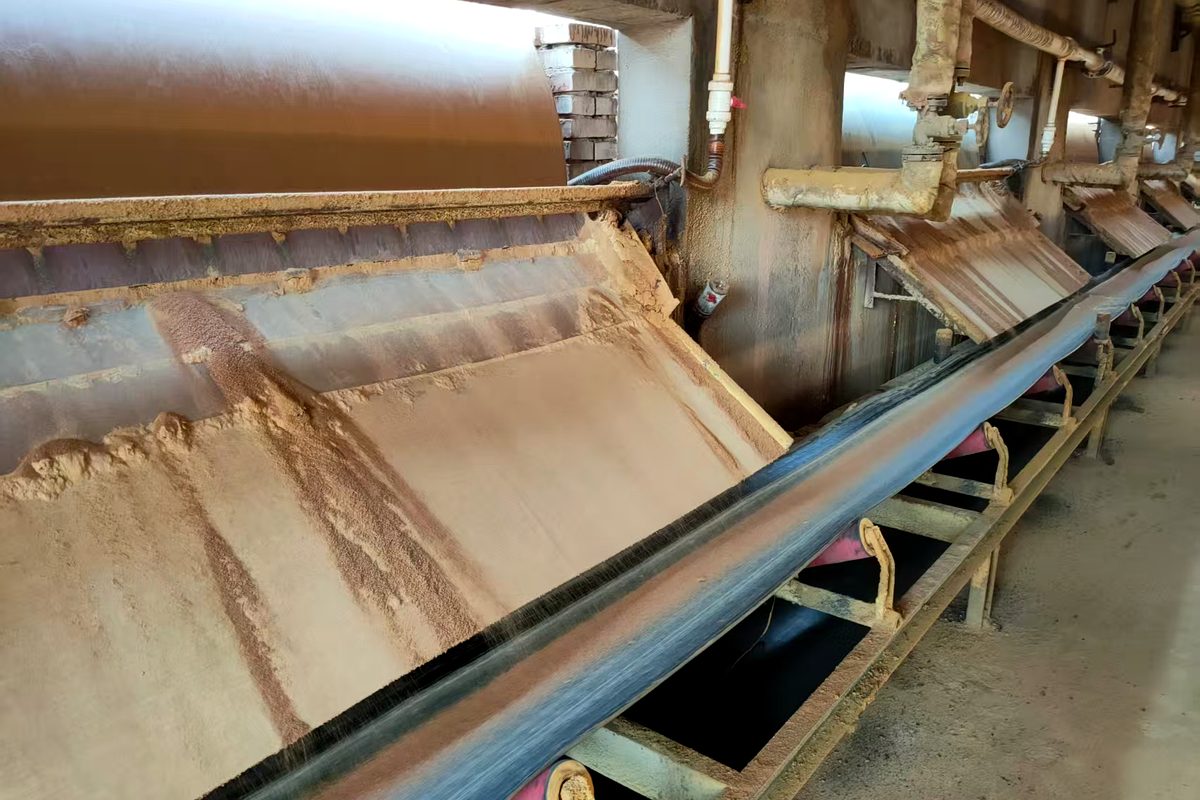
How each one works
A drum flaker dips a steam-heated drum into concentrated liquor. A film dries on the shell in one revolution and a knife takes it off as flake, 2–4 mm thick. Residence time is seconds; the equipment is compact and the product is dense.
A spray dryer atomises the liquor into a hot air stream. Droplets dry in suspension as they fall through a tall chamber, and the product leaves as hollow spheres. Residence time is tens of seconds; the equipment is tall, and the product is free-flowing with a much lower bulk density.
The comparison that matters
| Criterion | Drum flaker | Spray dryer |
|---|---|---|
| Capital cost, same output | 1× | ≈2.5–3× |
| Energy | Steam only, 1.2–1.5 t per t of water evaporated | Steam or gas for hot air, plus atomiser power; 1.6–2.0 t equivalent |
| Product form | Dense flake, 2–4 mm | Hollow spheres, free-flowing |
| Bulk density | 0.6–0.9 t/m³ | 0.35–0.5 t/m³ |
| Dissolution rate | Good, slower in cold water | Fast |
| Practical capacity ceiling | ≈30,000 t/y per train | 100,000 t/y and above |
| Footprint | Low, wide | Tall chamber, high headroom |
| Maintenance | Knives and drum surface are wear parts | Atomiser and nozzle wear; chamber cleaning |
| Dust | Low at generation, some fines in handling | Higher, needs bag filter |
Energy figures are per tonne of water evaporated at the same feed concentration. Their absolute values depend on steam cost and on how well the plant is insulated.
Where the decision actually turns
Three factors decide it, in this order: capacity, market form, and energy price.
- Below 30,000 t/y, a drum flaker wins on capital almost every time — and the gap is large enough to fund several years of energy difference
- Above roughly 60,000 t/y in one train, drums become impractical: you would install six of them, and the maintenance burden of six knife stations exceeds the energy saving
- If your customers demand a free-flowing powder for automatic dosing, flake will not sell regardless of cost — the market decides, not the process engineer
- If steam is cheap (captive boiler, waste heat) the drum gets better; if steam is expensive and gas is available, the spray dryer closes the gap
The hybrid nobody asks for, and should
Some plants run a drum flaker for standard grade and a small spray dryer for a premium powder, sharing the same feed tank and scrubbing system. The capital is higher than either alone, but it lets a producer serve two markets with one reaction train — and shift the split as prices move. It is worth modelling before committing to a single route.
What we would tell a first-time buyer
Build the liquid train first, size the steam header and the plot for drying, and add the dryer when the order book justifies it. A drum flaker is the easier second step: smaller capital, shorter delivery, and it can be installed without a new building. Move to spray drying when volume, not product form, becomes the constraint.